Aside from conversing with characters and finding quests, the game consists of combat, equipment and leveling up your skills. The combat is pretty standard. You tell the 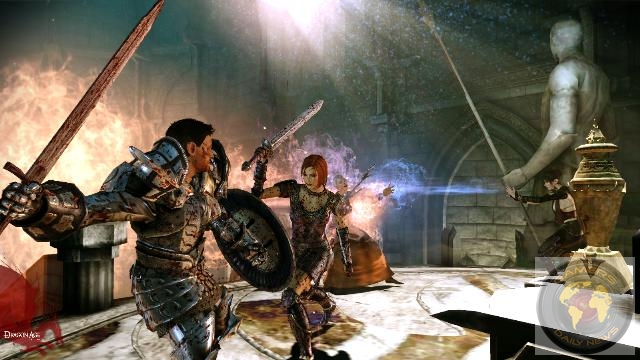 character who to attack and use special abilities to deal greater damage. The ally A.I. is decent, but to keep from having to baby them you’ll want to modify some of their tactics. While there are plenty of options to customize the A.I., giving you a great level of control, there are some basic options missing. For example, being able to cast an area of effect spell on a group of targets instead of just one. You can only focus on one target or ally.
No matter how well you master the combat abilities, however, the game’s difficulty will still spike like a polygraph test. One moment you are clearing out the dungeon without trouble, the next, half of your resources go to waste in a near impossible combat scenario. At one point you’ll be finding health items at every turn, the next it will all be gone. It doesn’t help that the game level scales, meaning enemies that were a snap early on may suddenly gain abilities that turn them into one giant irritation.
Money is also pretty scarce overall and can vanish quickly. However, this isn’t too bad as most of your best equipment will be loot. That isn’t to say you’ll be finding sweet stashes of equipment every five minutes like in Diablo, but once in a while you’ll find a sword that’s much better than any you could buy at the smithy. Of course, equipment must be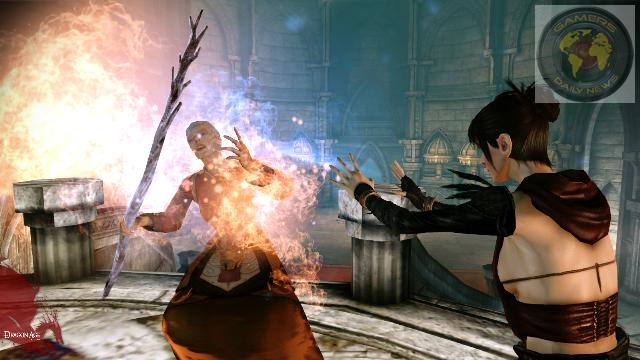 chosen carefully as different types of armor and weaponry will cause different amounts of fatigue, which effect how much energy or mana that skills or spells cost. It also effects how quickly energy or mana regenerates. Loading characters like rogues or mages with fatigue is unwise, but warriors are capable of dealing with the extra weight.
For a game with only three potential character classes, one would imagine there isn’t much variety in building your character. However, this is not completely true. Different races have different effects on certain statistics, and dwarves as a whole are unable to use magic. However, they also carry a small immunity to spells as well making them effective against fighting mages. Further, the amount of skills are wide and varied. A player may be tempted to become a jack of all trades, but this is unwise. The best method is to choose a few key abilities to focus on. For example, a fighter may want to focus on combat using a shield exclusively instead of trying to use two-handed specialties as well. In addition the player will be able to unlock four additional specializations for that class, only two of which they can choose to level in. Any specialization unlocked in one play through carries on into the next.
The greatest strengths of Dragon Age come in the story and, to some extent, character customization. Superficially it all seems simple and even derivative, but in-depth it all becomes very complex. While all six origins gradually lead to the same overall story arc, choices made will echo throughout and modify the world. Scenarios may easily play out very differently across different play throughs, adding a good amount of replayability to an already long game.
Dragon Age: Origins is an excellent game, but it is doubtful to suit everyone. If you like a story, investing several hours at a time to get little done and want to customize a character to be unique, then this game is for you. If you want to see endless action crammed into every second you are holding the controller, then skip it. If you are somewhere in between, then rent it first and see if it tickles your fancy.






