[Jordan] In 2006 you did some prototype/concept work for Maxis on the Sims franchise… what exactly did that entail, and what did you think of the experience?
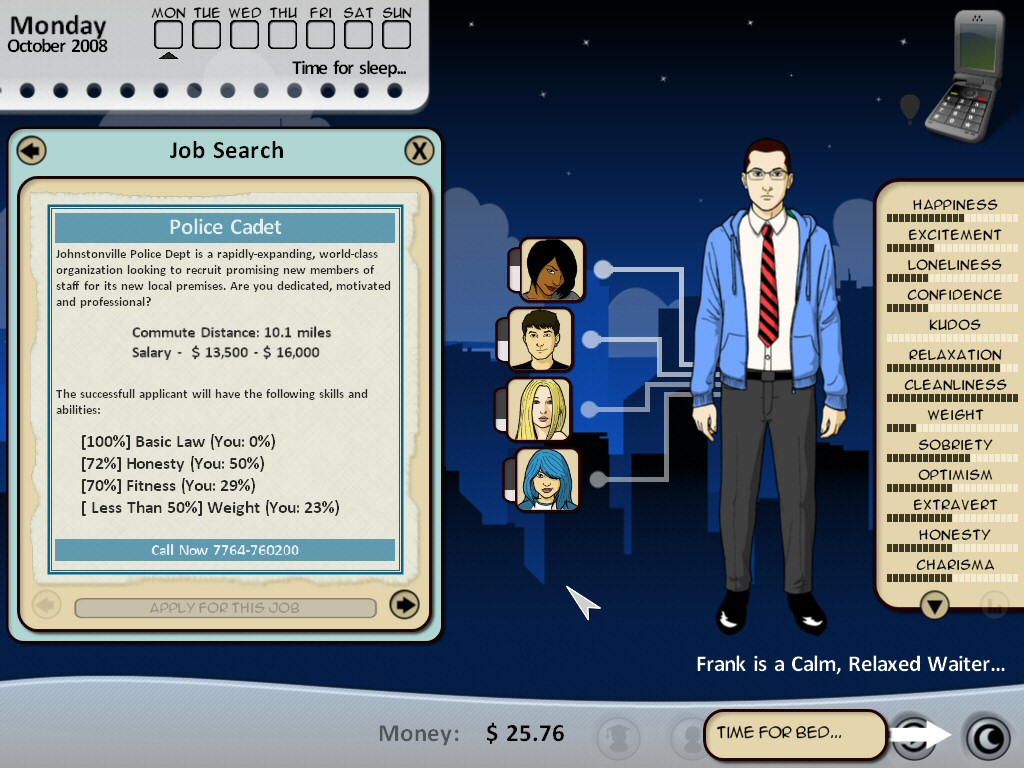
[Cliff] That was fantastic fun. They basically said ‘what would you do, if you had the sims franchise. Show us a prototype.’ And I did that, and it was great fun to do. They wanted people outside EA/Maxis to develop different gameplay prototypes for use by them in developing the sims franchise. I worked from home on a small-budget game and somebody else paid, plus it was working indirectly for Maxis, what could be better?
[Jordan] What counts as the official birth of Positech Games? I know you say it was founded in ‘97, but I know you also didn’t go full-time on it until 2006… What was the first game you ever sold, and what else were you doing for work at the time?
[Cliff] 1997 was Asteroid Miner, which was the first game I made and tried to sell. That was part time. as I recall I was working for a massive IT company as an hourly contractor at the time. We had nothing to do all day, so it was pretty easy to find the enthusiasm to code a game when I got home!
[Jordan] Making games is one thing, but starting a business can be a whole different monster… what were some of the biggest challenges early on, specifically from a business standpoint?
[Cliff] Promotion is very difficult. People need to know about your games, and back then there was nothing like steam, so you had to do old-school stuff like mail CD-ROMs with the games installer to people at magazines. That all takes time, and you need to be pretty organized about it. You really had to develop some business and marketing skills back then, which was excellent, because now we have the easy option of the casual games portals or other digital publishers, a lot of indie devs just hand over their game to someone else to sell, and often lose a whole chunk of the IP, and their market by doing it. It was harder back in 1997, but it was also more lucrative, in some ways.
[Jordan] By my count you’ve released ten games total, is that right or am I missing some?
[Cliff] That sounds about right. i tend to ignore all of them apart from GSB, Democracy and Kudos these days. The others do not really sell.
Kudos 2, a cool life-sim game with some hip looking art
[Jordan] On average, how much time do you normally have between releases?
[Cliff] It used to be six months, then became a year, now it looks like it will be 18 months or even longer, as the games have got bigger, more ambitious and more complex.
[Jordan] Is there one of your games that’s your favorite? Or is that impossible to pick, like having to pick your favorite cat or something?
[Cliff] As a finished product, I think Gratuitous Space Battles is the best game I’ve made. In terms of original game design, I think it’s Democracy, and Democracy 2. There are things i like and dislike about all my games though. I like the background color changing effects in Kudos 2 :D
[Jordan] Looking back at all the games you’ve completed and released, what’s the one biggest lesson you’ve learned through all of it?
[Cliff] Make a really good game. You can read forever about PR, marketing, business, pricing, promotion, website design, SEO and so on, but the biggest single factor in determining the success of an indie game, is the quality of the game. My best games sell way better than my worse games.